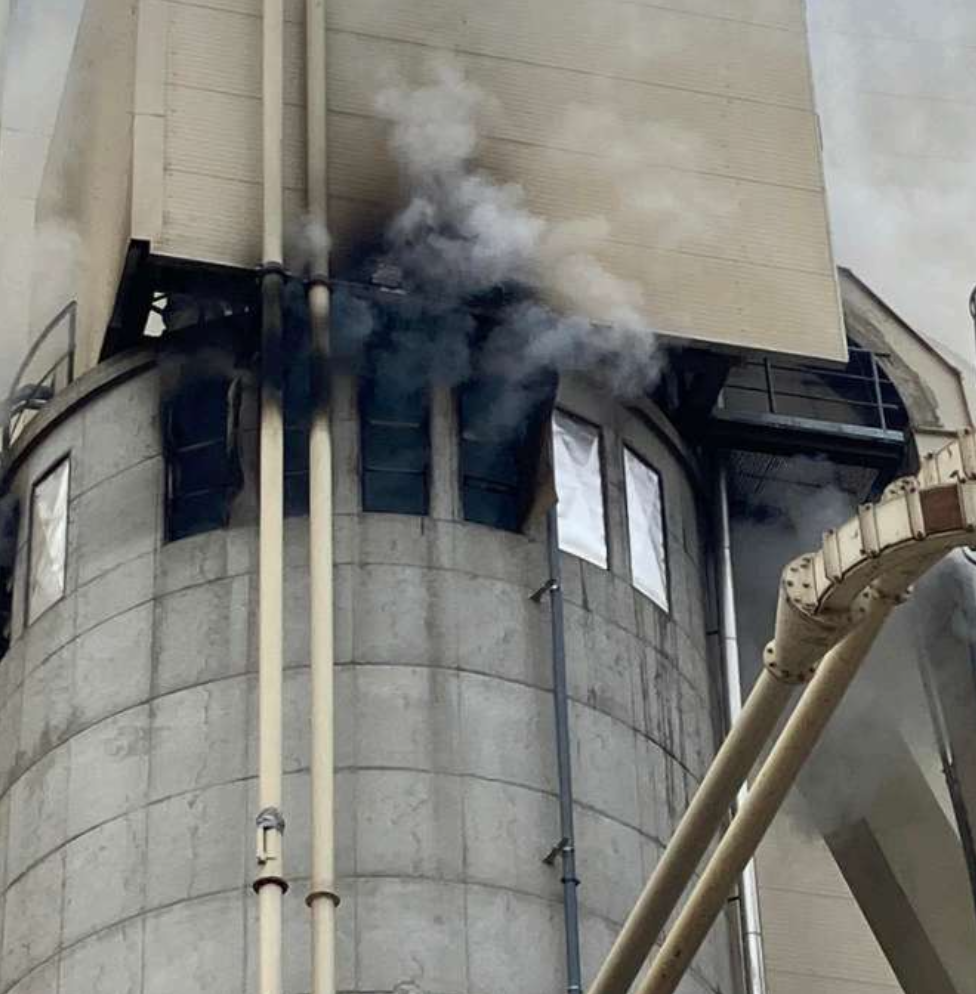
The reason is structural. Most EU member states implement the two ATEX directives and stop there. Hungary runs a third, parallel track: an extensive national fire safety code with binding effect and a detailed technical guideline for explosion protection. This third track has no equivalent in most of the jurisdictions foreign operators come from, and it is where nearly every compliance gap sits.
This article is written for the operational side: the EHS manager, plant manager or project engineer who has to make an existing or new Hungarian site defensible. It is not a substitute for the legal texts, and Hungarian requirements change; the state of play described here is current as of June 2026.
Three parallel tracks, not one
Track 1: product compliance
2014/34/EU (ATEX 114), implemented by 35/2016. (IX. 27.) NGM rendelet.
This is the track you already know. Equipment and protective systems intended for use in potentially explosive atmospheres must be conformity assessed, CE marked and accompanied by an EU declaration of conformity. Nothing Hungary-specific here, and imported certified equipment is accepted on the same basis as anywhere in the EU.
One practical note: the operating and maintenance manual must be available in Hungarian. This is not a formality. The commissioning handover documentation list in the national technical guideline explicitly includes a Hungarian-language equipment manual.
Track 2: workplace safety
1999/92/EC (ATEX 137), implemented by 3/2003. (III. 11.) FMM–ESzCsM együttes rendelet.
This is the employer-side directive, familiar under names such as the Explosion Protection Document, Explosionsschutzdokument or DSEAR risk assessment. In Hungary the deliverable is the robbanásvédelmi dokumentáció (RBD).
Two points that catch foreign operators out:
There is no fixed review cycle. The RBD must be revised when the workplace, the work equipment or the work organisation changes significantly, is extended or is modified. It is event-driven, not calendar-driven. A parent-company policy of „review every three years” neither satisfies nor is required by Hungarian law.
The general occupational risk assessment is a separate obligation. Under the Hungarian Labour Safety Act (1993. évi XCIII. törvény, section 54), every employer must carry out a risk assessment before starting the activity, thereafter when justified, and at least every three years. This one is calendar-driven. It covers all workplace risks, of which explosion is only one, and it does not replace the RBD. Many sites hold one document and believe it covers both. Actually, it does not.
Track 3: fire safety, the Hungarian speciality
54/2014. (XII. 5.) BM rendelet (OTSZ, the National Fire Safety Code), and TvMI 13.5:2025.02.01., the technical guideline on explosion protection issued by the National Directorate General for Disaster Management (BM OKF).
This is the track most foreign operators have never encountered, because in their home jurisdiction explosion protection sits entirely within occupational safety law. In Hungary it sits in both, with a separate authority, separate documentation and separate inspection.
The technical guideline is formally voluntary in application, but applying it is deemed to satisfy the fire safety code. In practice it functions as the reference standard, and departing from it requires the designer to demonstrate an equivalent level of safety.
Note the version. TvMI 13.5 has been in force since 1 February 2025 and replaced TvMI 13.4. If your documentation cites 13.4 or earlier, it is referencing a guideline which is obsolete by now.
The documents you must hold during operation
The technical guideline lists, as a condition of maintaining explosion protection during operation, the following documents:
- Robbanásvédelmi dokumentáció (explosion protection document), or for mines, the explosion prevention plan
- A valid, current zone classification documentation (zónabesorolási dokumentáció), listed as a separate item or integrated part of the explosion protection document
- Operating, handling, maintenance and repair instructions for Ex equipment
- A register of Ex equipment (the inspection dossier under MSZ EN IEC 60079-17:2024)
- A cleaning plan, for technologies with a combustible dust hazard
Plus, from the commissioning stage, documented evidence that the explosion protection document has been the subject of worker training.
The item that most often fails is the second one. In most jurisdictions the hazardous area classification is a chapter inside the explosion protection document. In Hungary it can, and often is a separate, standalone deliverable with its own content requirements, its own update triggers, and an explicit expectation that the classification is supported by calculation and detailed technical justification, recorded such that another professional can reconstruct the methods, findings and conclusions.
A parent-company HAC drawing transferred into the Hungarian document, without the underlying release-source analysis, material data and calculation, does not meet this test. It looks like a zone classification, however it must be much more than that.
Two requirements with no foreign equivalent
Fire safety review on introducing the technology
Under section 20(2) of the Fire Protection Act (1996. évi XXXI. törvény), introducing or placing on the market a fire or explosion hazardous technology requires a tűzvédelmi szempontú vizsgálat, a fire safety review. The documented output covers the technology description, hazardous substances, the standards and legislation considered, the zone classification, built-in protection systems, an ignition source analysis for the whole technology, operating conditions, and a conclusion on whether operation is recommended.
This review must be repeated if the technology is extended or modified. It is not the same as commissioning, and it is not covered by a CE declaration.
TMT: a national product certification
Tűzvédelmi megfelelőségi tanúsítvány, governed by 22/2009. (VII. 23.) ÖM rendelet.
This is a Hungarian certification that applies, among other product categories, to fire or explosion hazardous machinery and equipment that falls outside the scope of ATEX. Such products may not be placed on the market, distributed or installed in Hungary without it. Obligation falls on the manufacturer, authorised representative, importer or distributor, depending on the route to market.
The relevance for a foreign operator is specific: equipment procured from a group-approved global supplier, perfectly legal elsewhere, may require a Hungarian certificate before it can be installed here. A paint spray booth is a textbook example. The certificate is valid for five years, renewal is not automatic, and it becomes invalid if the delivered product deviates from the tested sample and its technical documentation.
The cost surprise: whole-room reclassification
This is the provision that most often produces an unbudgeted capital cost, and it exists nowhere else in comparable form.
Under the technical guideline, if the combined volume of the hazardous zones around the technology reaches 20% of the room volume, or the vertical projection of the zones exceeds 20% of the floor area, the entire room shall be classified as explosion hazardous from a fire risk perspective. The consequence is that the room or contiguous group of rooms must be separated from non-hazardous rooms by fire-resisting construction appropriate to the building’s governing risk class.
At 40% of the room air volume, the entire room volume must be declared explosion hazardous, and the volume outside the original classification becomes Zone 2 for gases and Zone 22 for dusts. Within that extended zone, the most hazardous gas or dust group present in the room and the most restrictive temperature class must be applied.
In other words, a few cubic metres of zone can move a whole building compartment into a different requirement set: fire separation, a wider population of Ex-rated equipment, extended electrical and lightning protection inspections, floor conductivity requirements, and Ex-suitable personal protective equipment down to the level of undergarments.
The engineering response is the same one that works everywhere: reduce the zones. Ventilation design is the cheapest lever, and it must be an input to the classification calculation rather than a constraint discovered afterwards.
Periodic obligations calendar
Obligation | Trigger |
General occupational risk assessment | At least every 3 years, plus when justified, plus immediately after an accident, excessive exposure or occupational disease |
Explosion protection document (RBD) | Significant change, extension or modification of the workplace, work equipment or work organisation. No fixed cycle. |
Zone classification documentation | Design phase, commissioning, and any change affecting the extent of the hazardous area or the method of protection |
Ex equipment periodic inspection | Per EN MSZ EN IEC 60079-17:2024, including assessment of the electrical equipment’s environment and clarification of the zone classification |
Electrical installation inspections | Per 40/2017. (XII. 4.) NGM rendelet |
Electrostatic and lightning protection inspections | Per the relevant technical guideline |
TMT certificate | Valid 5 years from issue, renewal not automatic |
Fire safety review | Repeat on extension or modification of the technology |
Who can sign
Hungarian professional qualification requirements apply. Depending on the deliverable, this can mean a fire protection engineer, an explosion protection specialist engineer, chamber membership in the Hungarian Chamber of Engineers (MMK), or a fire protection professional examination certificate.
A report authored by a parent-company engineer, however competent, generally cannot substitute for a Hungarian-qualified signature on the statutory documents. The practical arrangement that works is a group-level technical standard implemented and signed off locally.
Language
Documentation intended for the authorities must be in Hungarian and for workers must be in a language understood by the workers. This includes the explosion protection document, the training record, the zone markings in the plant, and the equipment manuals. Bilingual documents are accepted and are usually the efficient solution for a foreign-owned site, provided the Hungarian version is complete rather than a summary.
Recent development worth knowing
TvMI 13.5 contains dedicated chapters on lithium-ion battery manufacturing and, new in the 2025 edition, on battery energy storage systems. The battery manufacturing chapter is unusually detailed, covering electrolyte storage and transfer, anode and cathode production, cell assembly, degassing, formation and module production, with specific requirements for local extraction, gas detection, floor conductivity and dust collection systems.
If you are commissioning or operating a battery plant or a BESS installation in Hungary, this is the controlling technical reference, and it is more prescriptive than the general international guidance your group standard is likely based on.
Checklist
For a new plant:
- Zone classification prepared during design, with calculation, not after layout freeze
- Ventilation concept as an input to that calculation
- Check against the 20% and 40% room thresholds before the building design is fixed
- Fire safety review before introducing the technology
- Explosion protection document and its training record before commissioning
- Verify whether any non-ATEX equipment requires a TMT certificate
For an acquired or existing plant:
- Confirm which TvMI version the documentation cites
- Check whether a standalone zone classification documentation exists, with calculation behind it
- Check the date of the last significant technology change against the date of the RBD
- Check whether the occupational risk assessment is within three years
- Check the Ex equipment register against what is physically installed
For imported equipment:
- EU declaration of conformity and ATEX certificate, or confirmation that TMT applies instead
- Hungarian-language manual
- The marking on the nameplate matched against the zone it will be installed in
Legislation and references cited
- évi XXXI. törvény on fire protection, technical rescue and the fire service (Ttv.)
- évi XCIII. törvény on labour safety (Mvt.), section 54
- 3/2003. (III. 11.) FMM–ESzCsM együttes rendelet on minimum occupational safety requirements for workplaces in potentially explosive atmospheres (transposing 1999/92/EC)
- 35/2016. (IX. 27.) NGM rendelet (transposing 2014/34/EU, ATEX)
- 22/2009. (VII. 23.) ÖM rendelet on obtaining the fire safety conformity certificate (TMT)
- 54/2014. (XII. 5.) BM rendelet, National Fire Safety Code (OTSZ)
- 40/2017. (XII. 4.) NGM rendelet on electrical installations
- TvMI 13.5:2025.02.01., Explosion protection, BM OKF
- MSZ EN IEC 60079-10-1:2021, MSZ EN IEC 60079-14:2025, MSZ EN IEC 60079-17:2024, MSZ EN 1127-1:2019